Finding the best IPTV for sports requires a different set of questions than choosing a service for general TV watching. Live sports are technically more demanding to stream than on-demand content, provider claims about specific leagues and channels are frequently unverifiable, and a service that performs well during a Tuesday drama may struggle when tens of thousands of viewers connect simultaneously at kickoff.
This guide explains what makes IPTV work well for live sports, how to evaluate any provider before paying, and what to verify before trusting a sports availability claim.
Why Live Sports Are More Demanding Than On-Demand Streaming
Before comparing providers, it helps to understand why live sports streaming is a genuinely harder technical problem than streaming a movie or series — and why no provider can honestly promise zero buffering during a major event.
The Server Capacity Challenge During Major Events
When you watch a movie on demand, your device requests that content asynchronously — independently of what anyone else is doing at that moment. Millions of viewers can watch the same film at different times, and the load on servers is distributed across hours or days.
Live sports work differently. When a major game begins, every viewer must receive the same content at virtually the same moment. A simultaneous spike of tens of thousands — or millions — of concurrent connections hits the provider's servers and content delivery network (CDN) infrastructure at kickoff. This "thundering herd" effect creates peak-load conditions that simply do not exist for on-demand content.
The consequence: a provider whose servers handle ordinary viewing traffic smoothly may still struggle at the precise moment you most need reliability — the opening of a championship game or a high-stakes playoff match. This is a structural challenge of live streaming, not a failure unique to any single provider. Any provider who claims to have completely solved it through branded "anti-freeze" or "anti-buffer" technology is using marketing language, not a technical guarantee.
Why Latency Matters More for Sports
Latency in IPTV refers to the delay between live action occurring and what appears on your screen. This delay exists in all IP-based video delivery — content must be encoded, transmitted, decoded, and displayed, and each step takes time.
The practical consequence for sports fans: if your IPTV stream has 20–30 seconds of latency and your neighbor's cable TV or a different streaming service has 5 seconds of latency, your neighbor may cheer a goal or score before you see it. Push notifications on your phone can spoil a result before it happens on your stream.
Latency depends on multiple factors: the source stream, the provider's encoding and delivery infrastructure, the streaming protocol used, the player app's buffer settings, your network, and your device. Longer buffer settings improve stability but increase delay; shorter buffers reduce delay but make the stream more vulnerable to brief network disruptions.
There is no universal latency figure for IPTV — it varies considerably between providers, player apps, and network conditions. What matters practically: during a trial, note whether your stream runs significantly behind a secondary reference (a neighbor, a live radio broadcast, or push notifications) and decide whether that delay is acceptable for your viewing habits.
How to Choose the Best IPTV for Sports
Stream Stability and Provider Infrastructure
For sports viewing, stream stability is more important than picture quality. A slightly lower-resolution stream that plays without interruption throughout a 90-minute match is a better sports experience than a high-resolution stream that freezes at key moments.
When evaluating a provider's stability claims, distinguish between:
- Marketing language ("anti-freeze servers", "zero buffering guarantee", "best sports performance") — none of these are verifiable or measurable without independent testing under real peak-load conditions
- Infrastructure signals — does the provider have documented backup streams or redundant servers for major events? Do they communicate proactively when server load is high? Can their support team answer technical questions about their delivery infrastructure before you subscribe?
No provider can guarantee perfect performance during every major live event. Treat any such guarantee as marketing rather than a technical commitment.
Internet and Home Network Requirements
Your home network is the variable you control. A provider can deliver a high-quality stream that your connection cannot sustain — and the result is buffering that the provider cannot fix.
Per the FCC Broadband Speed Guide, minimum download speeds for streaming video are:
| Quality | FCC Minimum (per stream) | Practical recommendation |
|---|---|---|
| Standard Definition (SD) | 3-4 Mbps | 5 Mbps |
| High Definition (HD) | 5-8 Mbps | 10-15 Mbps |
| Ultra HD (4K) | 25 Mbps | 40 Mbps+ |
These are per-stream minimums for a single activity. A household where multiple people watch simultaneously, or where other devices are active on the network, needs proportionally more. Whether 4K sports streams are available from any specific provider is a detail to verify directly — do not assume based on general marketing claims.
For live sports in particular, consistency matters more than peak speed. A connection that delivers 25 Mbps most of the time but drops to 5 Mbps during peak evening hours (when major games are typically scheduled) will produce buffering at the worst possible moments. Run a speed test during prime-time evening hours to get a realistic picture of available bandwidth during sports viewing time — not just at 2 PM on a weekday.
Wi-Fi vs Ethernet for Live Sports
This is the single most impactful network improvement most households can make for live sports streaming.
Wi-Fi limitations for live sports: Wi-Fi signal strength fluctuates constantly due to interference from neighboring networks, physical obstructions, and competing devices. A brief signal drop that your phone handles without you noticing — because your phone rebuffers ahead — causes an immediately visible freeze in a live stream that cannot buffer ahead. Live sports have much smaller tolerance for signal interruptions than on-demand content.
Ethernet for live sports: A wired Ethernet connection from your router directly to your streaming device delivers consistent, interference-free bandwidth. The difference during a major event with high concurrent household activity can be substantial.
If running an Ethernet cable to your main sports TV is not practical, consider:
- Positioning your router closer to the TV if possible
- Using the 5 GHz Wi-Fi band rather than 2.4 GHz — it is faster and less congested in most home environments, though it has shorter range
- Ensuring no other devices are running large downloads, video calls, or updates during major events
For Firestick users, Amazon offers an official Ethernet adapter that connects to the Firestick's USB port and provides a wired connection — a practical solution for a main sports viewing setup.
Device Compatibility and Performance
Different devices handle sustained high-bitrate live sports streams differently. This is a factor most buying guides omit.
Considerations by device type:
- Firestick 4K Max / 4K Plus (Fire OS): Strong processors with Wi-Fi 6 support handle sustained high-bitrate 4K and HD streams well. The 4K Max in particular has better thermal management for extended viewing sessions.
- Older Firestick models (Lite, 3rd gen HD): Lower-spec processors can show performance degradation during sustained 4K or high-bitrate HD streams, particularly later in a long viewing session as the device warms up.
- Vega OS Firestick models (Fire TV Stick 4K Select, Fire TV Stick HD 2026): Restricted to Amazon Appstore apps only — sideloading not supported. Confirm your preferred IPTV player app is available in the Appstore before subscribing.
- Android TV / Google TV devices (NVIDIA Shield, modern TCL/Sony/Hisense TVs): Generally strong performers for sustained sports streaming; full Google Play Store access for player apps.
- Samsung and LG Smart TVs: Limited native IPTV player app selection in their respective app stores (Tizen and webOS). TiviMate — often recommended for sports due to its fast channel switching — is not available natively on either platform; it requires an Android-based device.
- Android Box (dedicated streaming boxes): Often the strongest performers for sustained sports streaming due to better processors, active cooling, and more RAM than stick-style devices.
For device-specific setup guidance, the IPTV for Smart TV and IPTV for Firestick guides cover platform-specific compatibility in detail.
IPTV Player Compatibility for Sports
The player app you use affects sports viewing in several practical ways:
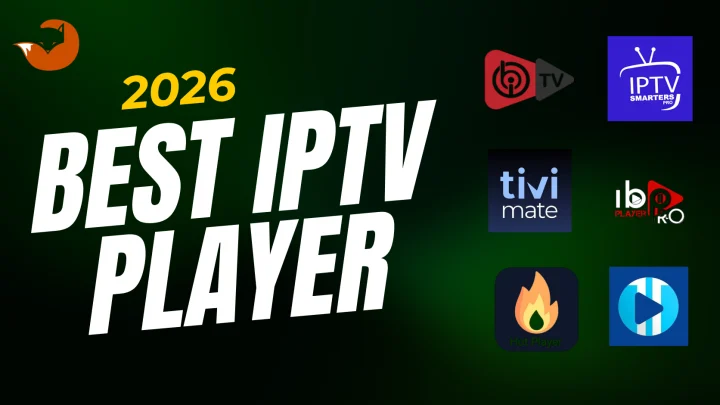
- Channel switching speed: How quickly the player loads a new channel matters during a multi-game evening. TiviMate is widely regarded as having fast channel switching on Android-based devices. IPTV Smarters Pro is another widely supported option across platforms.
- EPG (Electronic Program Guide) accuracy: A sports viewer needs to know what game is on which channel and when. A well-integrated EPG from the provider makes this usable without scrolling through thousands of channels manually.
- Catch-up TV support: Some providers offer replay of recently aired events. Whether this includes sports content you care about is a detail to confirm — not assume.
- Buffer settings: Some player apps allow you to adjust the buffer size. A larger buffer improves stability at the cost of increased latency; a smaller buffer reduces delay but makes the stream more sensitive to brief network fluctuations. The right setting depends on your network quality and your tolerance for delay.
Picture Quality and Frame Rate
Sports content specifically benefits from high frame rate delivery — fast-moving gameplay, especially in football, basketball, and soccer, benefits more from smooth motion than from higher resolution. A 1080p stream at 50 or 60 frames per second typically looks better for live sports than a 4K stream at 30 fps.
Whether a specific provider delivers high-frame-rate sports streams is a detail to verify during a trial, not a claim to accept from marketing materials. Frame rate specifications for sports streams are rarely disclosed transparently by IPTV providers.
Simultaneous Streams for Sports Households
Sports households frequently have multiple games running on different screens simultaneously — different games on TV and a mobile device, or two family members watching different sports.
Confirm the following before subscribing:
- How many simultaneous streams does the plan include?
- Are multi-stream plans available, and at what cost?
- Does simultaneous stream count apply across all devices or only within specific plans?
A provider who cannot answer this question before you pay is a provider who may surprise you after.
Support Quality and Response Time
For sports viewers, this is particularly critical: problems tend to occur at peak times — exactly when a provider's support is most likely to be busy. A provider whose support takes 24 hours to respond is not useful when a major event is in progress.
Test support responsiveness before subscribing. Send a specific technical question — ask about their stream stability during major events, their server redundancy for high-traffic games, and their recommended player app for your specific device. The quality and speed of the response tells you more about the service than any marketing claim.
How to Verify Sports Availability Before Paying
This is the section most IPTV buying guides skip entirely — because most buying guides are written by providers who benefit from leaving it vague.
Sports channel and league availability in IPTV services depends on content licensing and authorization. A provider may carry a channel in their lineup today that is removed tomorrow due to a licensing change. A provider may claim to carry a specific league's coverage without actually holding the appropriate rights.
Steps to verify before paying:
- Ask directly and specifically. Do not ask "do you have sports channels?" Ask: "Do you currently carry [specific type of sports content you actually watch]? Is this available in the plan I'm considering?" A vague positive answer is not confirmation.
- Test during a trial on the content you care about. If a provider offers a trial period, test it specifically on the sports content you want — at peak viewing hours, not on a weekday afternoon. Load the channels that matter to you, not just any sports channel.
- Test at event time. The most important performance test for sports viewing is at the start of a major event — kickoff, tip-off, or first pitch — when server load spikes. A service that performs during a quiet test will not necessarily perform at that moment.
- Ask about PPV and special events explicitly. If you watch PPV events (major boxing or combat sports cards, for example), confirm whether these are included in the standard subscription or require an additional purchase. "PPV included" claims are common in marketing material — confirm the current terms directly with the provider before paying.
- Check the refund policy before paying. If the sports content you wanted is not available or the stream is not acceptable, what are your options? This should be a clearly written policy you can find before checkout.
Sports IPTV Red Flags to Avoid
These patterns are disproportionately common in the sports IPTV space:
- Named league claims without authorization disclosure. Any provider that lists specific leagues (NFL, NBA, Premier League, Champions League, UFC) as "included" without explicitly addressing content licensing is making a claim that should be verified, not assumed.
- "Zero buffering" or "anti-freeze guaranteed" language. These are marketing phrases with no technical basis. No provider can guarantee no buffering during a Super Bowl or Champions League final under all network conditions and server load scenarios.
- "PPV included at no extra cost." This claim is common and frequently unverifiable. Confirm directly and in writing before subscribing.
- Inflated sports channel counts. "18,000 sports channels" is a marketing number — the count of channels in the lineup does not indicate whether the specific sports you watch are included.
- "Tested by sports fans" claims with no methodology disclosure. Without specifics about what was tested, when, on what device, and under what conditions, these claims cannot be evaluated.
- No support response before purchase. If a provider cannot answer a specific question about their service before you pay, they are unlikely to respond helpfully when a problem arises during a game.
- Only cryptocurrency or gift card payment accepted. Standard payment methods with dispute resolution protect you when a service fails to deliver as described. Untraceable payment methods remove that protection.
Questions to Ask Support Before Ordering
These specific questions help separate providers who understand their own service from those who rely on marketing copy:
- "Does your service currently carry [type of sports content you want]? Is this in the standard plan I'm considering, or does it require an additional purchase?"
- "What player app do you recommend for my device for live sports? Is it available in the official app store for my platform, or does it require sideloading?"
- "How does your service handle server load during major events when many people are watching the same stream simultaneously?"
- "What is your refund policy if the sports content I want is not available or the stream quality is not acceptable?"
- "How many simultaneous streams does my plan include? Is a multi-stream option available?"
- "What is your support availability and response time during major live events when issues are most likely to occur?"
Evaluate both the content of the answers and how quickly they arrive. A provider who responds within a few hours with specific, accurate answers is demonstrating the kind of service that matters most when something goes wrong during a game.
Before You Subscribe: A Sports IPTV Checklist
Before paying for any IPTV service for live sports:
- I have confirmed my device model and operating system, and verified my preferred player app is available for it
- I have asked the provider specifically about the sports content I watch — not accepted a generic "yes, we have sports"
- If the provider offers a trial, I have scheduled to test it at peak evening hours and during the start of an actual live event
- I have confirmed whether PPV content I care about is included or costs extra
- I have tested my internet speed during a typical evening hours period — not just at off-peak times
- I know whether I'll use Wi-Fi or Ethernet for my primary sports screen
- I have confirmed the simultaneous stream count for my plan
- I have found and read the refund policy before making any payment
- I have tested support responsiveness with a specific question before subscribing
- I know the payment method I'll use and that it provides dispute resolution if needed
How FoxTele Works for Sports Viewers
FoxTele is a US-market IPTV service with prepaid, non-recurring plans.
Plans:
| Plan | Price |
|---|---|
| 3 Months | US$30 |
| 6 Months | US$45 |
| 12 Months | US$70 |
Supported devices include: Amazon Firestick, Android TV and Android Box, Samsung and LG Smart TV, MAG Device, mobile and tablet, Windows PC, and Mac. Confirm compatibility for your specific device and model before subscribing.
Order process: Select a plan on the FoxTele website, submit your order request, FoxTele reviews the request, you receive a payment link by email or WhatsApp, complete payment, then receive your setup and activation information. There is no automatic checkout.
For sports viewers specifically: Before subscribing, contact FoxTele support to confirm what sports content is currently available in your plan, whether the content you want is accessible on your device, and how the service handles high-traffic live events. This is the same due diligence recommended for any IPTV provider in this guide.
Contact:
- Email: support@foxtele.us
- WhatsApp: +1 450-485-2195
Trial availability, refund terms, stream limits, sports content details, and specific device compatibility should be confirmed directly with FoxTele before subscribing.
Looking for IPTV for sports viewing? Before choosing a service, confirm your device compatibility, internet setup, stream limits, and the exact sports content you need. Explore FoxTele plans or contact support with compatibility questions.
Looking for IPTV for Sports Viewing?
Before choosing a service for live sports, confirm your device compatibility, internet setup, stream limits, and the exact sports content you need. Review FoxTele plans or contact support with compatibility questions before submitting an order request.
Frequently Asked Questions
What is the best IPTV for sports?
There is no single best option — the right service depends on your specific sports content requirements, your device, your internet connection, and your tolerance for potential delays during peak events. Use the evaluation criteria in this guide to assess any provider: ask specifically about the sports content you want, test during a trial at peak hours, verify PPV and simultaneous stream terms, and confirm support responsiveness before paying.
Is IPTV good for live sports?
IPTV can deliver high-quality live sports viewing on a reliable broadband connection with a compatible device and a provider with adequate server infrastructure. However, live sports place greater technical demands on streaming infrastructure than on-demand content — all viewers must receive the same content simultaneously, which creates peak-load challenges during major events. No IPTV service can guarantee zero buffering during every major live event. With a wired Ethernet connection, adequate bandwidth, and a provider tested during actual peak conditions, many users have a positive sports viewing experience.
Why does IPTV buffer during major sports events?
During major live events, every viewer connects to the same stream at approximately the same time — at kickoff, tip-off, or the start of a round. This sudden spike in simultaneous connections puts extreme load on the provider's servers and content delivery network. Unlike on-demand streaming, live content cannot be pre-buffered or distributed asynchronously across viewing sessions. Even providers with robust infrastructure can experience performance degradation during peak moments. This is a structural challenge of live streaming technology, not a failure unique to one provider.
Does IPTV have more delay than cable?
Yes, typically. IPTV inherently has more latency than traditional cable or satellite broadcast because content must be digitally encoded, transmitted as data packets, and decoded on your device — each step adding delay. The amount of delay varies by provider, player app, buffer settings, and network conditions. Practical consequences: push notifications or neighbors with different feeds may reveal a score before you see it on your stream. During a trial, compare your IPTV stream's timing against a secondary reference to understand the real delay in your specific setup.
Is Ethernet better than Wi-Fi for IPTV sports?
Yes, for live sports specifically. Wi-Fi signal fluctuates due to interference, distance, and competing devices. A brief signal drop that is invisible in on-demand streaming causes an immediately visible freeze in a live stream that cannot buffer ahead. A wired Ethernet connection to your streaming device delivers consistent, interference-free bandwidth and is the most effective single home network improvement for live sports stability. Firestick users can use an official Amazon Ethernet adapter to add a wired connection.
How do I verify sports channels before subscribing?
Ask the provider directly and specifically — not "do you have sports" but "do you currently carry [specific content] in the plan I'm considering?" If a trial is available, test it on the specific content you want at peak evening hours, and test at the actual start of a live event when server load is highest. Confirm PPV terms separately if you watch pay-per-view events. Find and read the refund policy before paying. The verification checklist in this guide covers each of these steps.
Can I watch IPTV sports on Firestick?
Yes, on Fire OS Firestick models. Fire OS devices (Fire TV Stick 4K, 4K Plus, 4K Max, Fire TV Cube, and the 2024 Fire TV Stick HD) support both Appstore app installs and sideloading. The 2025 Fire TV Stick 4K Select and 2026 Fire TV Stick HD run Vega OS and are limited to Appstore-only apps. For the best sports streaming performance on Firestick, the 4K Max is the strongest Fire OS model due to its processor, RAM, and Wi-Fi 6 support. For complete setup guidance, see how to install IPTV on Firestick.